
by lamidontist
“Just rinse your mouth with warm salt water.”
You may have heard this advice from your parents, grandparents, friends—or even your dentist.
Maybe you have a sore gum, a small mouth ulcer, or discomfort after a dental procedure, and someone immediately suggests a warm salt-water rinse.
But what does salt water actually do?
Does it cure an infection?
How much salt should you use?
And can you simply keep rinsing instead of seeing a dentist?
Let’s make it simple.
What Is a Warm Salt-Water Mouth Rinse?
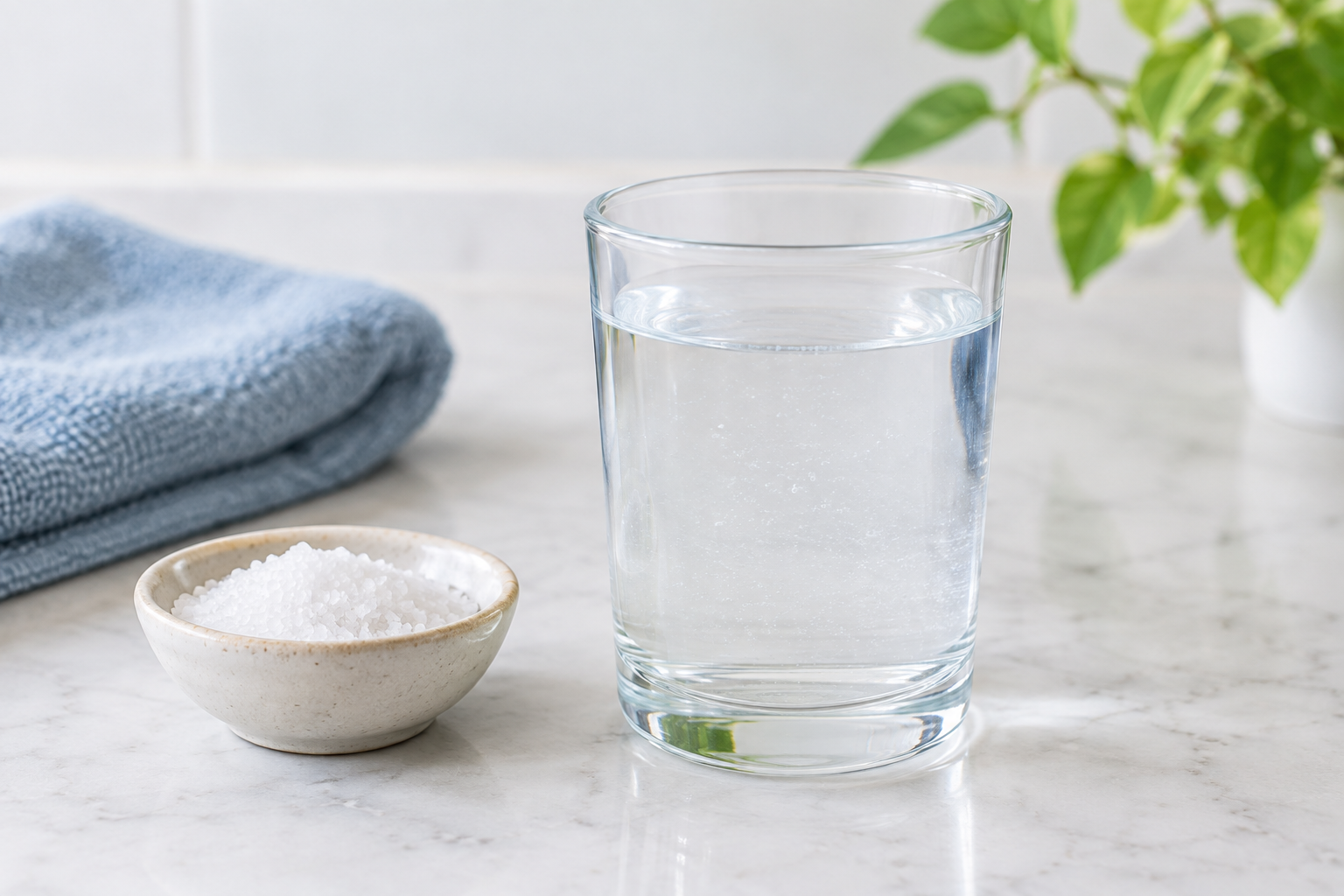
A warm salt-water rinse is simply warm water mixed with a small amount of salt, which is then gently swished around the mouth and spat out.
It is an inexpensive and simple home-care measure that can help keep the mouth clean and soothe irritated tissues.
It is commonly used as an adjunct to oral care, especially when the gums or tissues in the mouth are sore or healing.
But it is important to remember:
Salt water can support oral care, but it isn’t a replacement for dental treatment.
Why Does Salt Water Help?
The mouth is naturally home to many different microorganisms.
When the gums or other tissues become irritated, keeping the area clean can help support healing.
A warm salt-water rinse may:
- Help flush away food debris
- Soothe irritated oral tissues
- Reduce discomfort from minor gum irritation
- Help keep the mouth cleaner when brushing is uncomfortable
- Support healing after certain dental procedures, when recommended by a dentist
The warm water can also feel soothing when the mouth is tender.
Think of it as a supportive measure, not a magic mouthwash.
Does Salt Water Kill All the Bacteria in Your Mouth?
No.
This is an important distinction.
Salt water is sometimes described as an antibacterial rinse, but that doesn’t mean it sterilises your mouth or eliminates all harmful bacteria.
Your mouth naturally contains many microorganisms.
A salt-water rinse can help with cleanliness and may have a soothing effect, but it doesn’t replace brushing, interdental cleaning, professional cleaning, or treatment of an underlying dental problem.
When Can a Warm Salt-Water Rinse Be Useful?
There are several situations where your dentist may recommend gentle salt-water rinsing as part of home care.
1. After Certain Dental Procedures
After some dental procedures, your mouth may feel sore or irritated.
A gentle warm salt-water rinse may be recommended to help keep the area clean and support healing.
However, the instructions can vary depending on the procedure.
Always follow your dentist’s specific post-treatment instructions.
For example, after a tooth extraction, vigorous rinsing immediately after the procedure may interfere with the blood clot that helps the extraction site heal.
So don’t assume that “salt water” automatically means “rinse immediately.”
2. Sore or Irritated Gums
If your gums feel mildly irritated, a warm salt-water rinse may provide temporary soothing relief.
But if your gums are repeatedly swollen, tender, or bleeding, don’t keep treating the symptom at home without finding out why.
Persistent gum problems can be associated with conditions such as gingivitis or periodontitis and may require professional care.
3. Minor Mouth Irritation
A warm salt-water rinse can sometimes be soothing when the tissues inside the mouth are mildly irritated.
For example, you may have accidentally bitten the inside of your cheek or irritated the area while eating.
It may make the mouth feel more comfortable while the tissue heals.
However, persistent or recurrent sores should be evaluated rather than repeatedly treated at home.
4. After Some Oral Injuries
For minor irritation or injury inside the mouth, keeping the area clean can be helpful.
A gentle rinse may help remove food debris and provide some comfort.
But a significant injury, persistent bleeding, or severe pain requires professional assessment.
How Do You Make a Warm Salt-Water Rinse?
You don’t need a highly concentrated solution.
A commonly used mixture is:
About ½ teaspoon of salt in a cup (around 240 mL) of warm water.
Stir until the salt dissolves.
The water should be comfortably warm—not very hot.
You don’t want to burn already-sensitive tissues.
How Should You Use It?
Take a small mouthful of the solution.
Gently move it around your mouth for a short period, allowing it to reach the areas that need attention.
Then spit it out.
Don’t swallow the salt water.
Repeat with another small mouthful if needed.
The rinse should be gentle.
You don’t need to vigorously swish as if you’re trying to clean a dirty floor!
Especially after dental procedures, follow the exact instructions given by your dentist.
Can I Use Very Hot Water?
No.
Warm is enough.
Using very hot water can burn the delicate tissues inside your mouth and make irritation worse.
If you wouldn’t comfortably hold the water in your mouth, it’s too hot.
Can I Use More Salt for Better Results?
More salt does not necessarily mean better results.
A very concentrated solution can taste unpleasant and may irritate the tissues in your mouth.
You don’t need to make the water extremely salty.
A mild solution is generally sufficient for a mouth rinse.
Can I Use Salt Water Every Day?
A salt-water rinse can be useful for short-term supportive care in certain situations.
But it shouldn’t become a substitute for your normal oral-hygiene routine.
Your everyday routine should still include:
Brushing twice a day + cleaning between your teeth + regular dental care.
If you feel that you need salt-water rinses every day because your gums are constantly sore or swollen, that’s a reason to find out why rather than simply continuing the rinse indefinitely.
Can Salt Water Cure a Tooth Infection?
No.
This is one of the most important things to remember.
If you have a dental infection, salt water may provide temporary comfort or help keep the area cleaner, but it does not eliminate the source of the infection.
For example, a deeply decayed tooth with infection cannot be cured simply by rinsing with salt water.
You may need dental treatment to address the actual cause.
So if you have:
- Facial or gum swelling
- Severe or worsening toothache
- Pus or a bad taste associated with an infected tooth
- Fever
- Difficulty opening your mouth
- Difficulty swallowing or breathing
you should seek prompt professional care.
Don’t keep rinsing and hope the problem will disappear.
Can Salt Water Replace Mouthwash?
Not exactly.
Salt water and commercial mouthwashes are not interchangeable.
Different mouthwashes contain different active ingredients and may be recommended for specific purposes.
Likewise, a salt-water rinse has its own limited role.
And remember:
Mouthwash isn’t a replacement for brushing and cleaning between your teeth either.
What About After Tooth Extraction?
This is where timing matters.
After an extraction, the area needs to form a stable blood clot as part of normal healing.
For this reason, vigorous rinsing immediately after an extraction is generally avoided.
Your dentist may advise gentle warm salt-water rinsing after an appropriate period, depending on the procedure and your individual situation.
So if you’ve just had a tooth removed, don’t automatically follow a generic internet instruction.
Follow the post-extraction instructions given by your dentist.
Does Salt Water Help With Mouth Ulcers?
A warm salt-water rinse may provide some temporary soothing relief for certain minor mouth ulcers or irritated areas.
However, salt water doesn’t necessarily make every mouth ulcer disappear faster.
Most minor ulcers heal on their own, but ulcers that are unusually large, very painful, recurrent, or persistent should be evaluated by a healthcare professional or dentist.
What If the Salt Water Burns?
If the rinse causes significant burning or irritation, stop using it.
The solution may be too concentrated, the water may be too hot, or the tissue may already be particularly sensitive.
A mouth rinse should not feel like a punishment!
The Bottom Line
Warm salt-water rinsing is a simple and inexpensive supportive measure that can soothe irritated tissues and help keep the mouth cleaner in certain situations.
But it isn’t a cure-all.
It cannot remove calculus, repair a cavity, replace a filling, or eliminate the source of a dental infection.
Think of it as a helper—not a treatment for every dental problem.
So the next time someone tells you,
“Just rinse with warm salt water.”
the better question is:
“What is causing the problem in the first place?”
Because sometimes a simple rinse is enough to support healing.
And sometimes, what your mouth really needs is a visit to the dentist.
Remember
Salt water can soothe.
It can’t replace dental treatment.
Frequently Asked Questions
How much salt should I put in warm water for a mouth rinse?
A commonly used mixture is about ½ teaspoon of salt in a cup (around 240 mL) of warm water.
Should the water be hot?
No. Use comfortably warm water. Very hot water can burn the tissues inside your mouth.
Can I swallow salt water?
It is better to spit it out rather than swallow it.
Can salt water cure a tooth infection?
No. It may provide temporary soothing relief, but it cannot remove the underlying source of a dental infection.
Can I use salt water after tooth extraction?
It may be recommended after certain extractions, but timing is important. Follow your dentist’s specific post-extraction instructions and avoid vigorous rinsing when advised.
Can I use salt water instead of brushing?
No. Salt-water rinsing does not replace brushing with fluoride toothpaste or cleaning between the teeth.
Is salt water good for swollen gums?
It may temporarily soothe irritated gums, but persistent or recurrent gum swelling should be assessed by a dentist to determine the underlying cause.
When should I see a dentist instead of just rinsing?
Seek dental care if pain or swelling persists or worsens, or if you have signs such as significant swelling, pus, fever, difficulty opening your mouth, difficulty swallowing, or difficulty breathing.
Medical note: This article is for general educational purposes and does not replace an examination or personalised advice from a qualified dental professional