
By Lamidontist
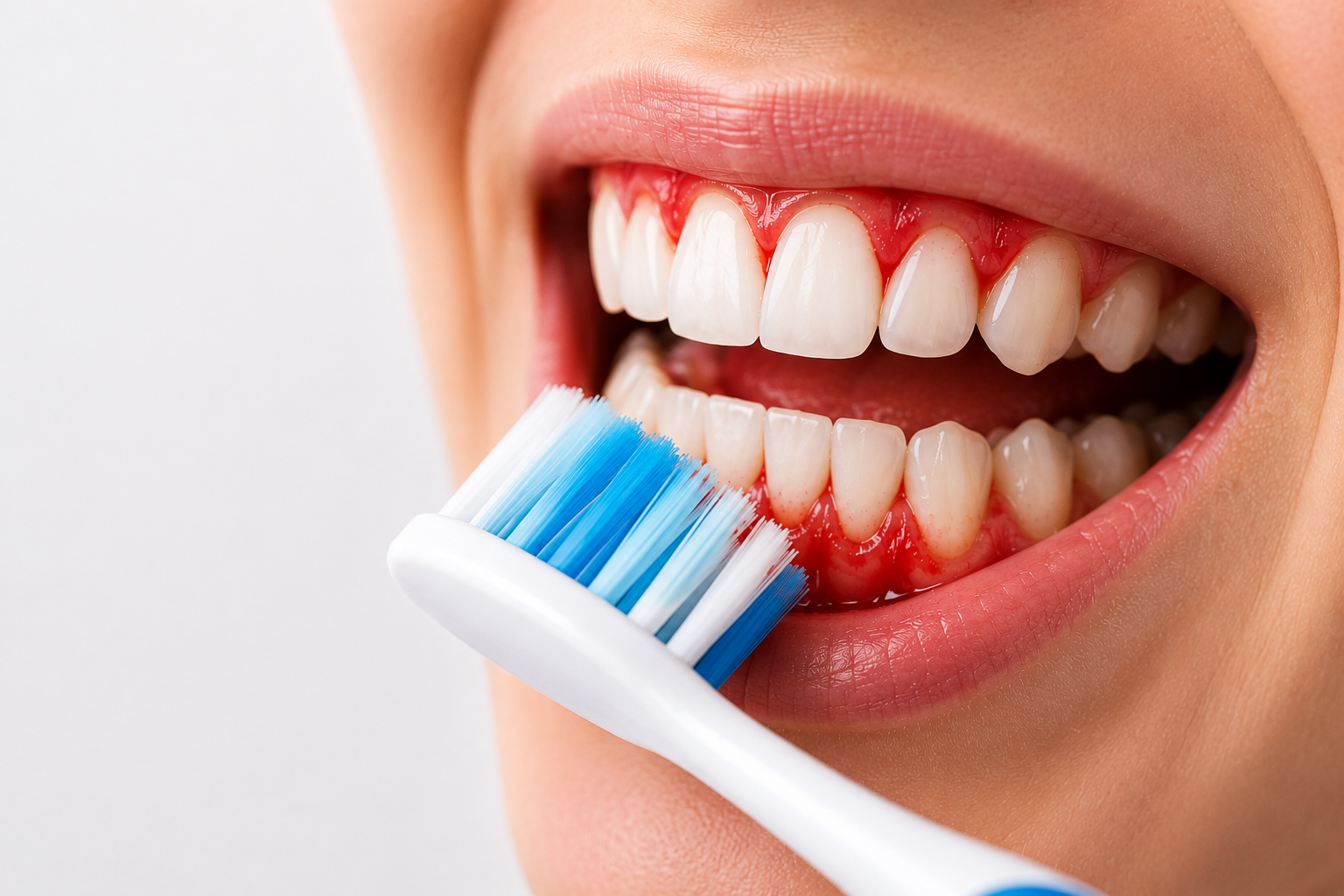
Have you ever noticed blood while brushing your teeth or spitting after rinsing your mouth?
Many people ignore it, thinking it’s normal. Others stop brushing the area because they’re afraid of making it worse.
The truth is: Healthy gums do not bleed.
Bleeding gums are usually an early warning sign that something isn’t right. The good news is that, in most cases, the problem can be treated and even prevented if you act early.
Let’s understand why gums bleed and what you can do about it.
What causes bleeding gums?
The most common reason is the buildup of dental plaque.
What is plaque?
Plaque is a soft, sticky layer of bacteria that forms on your teeth throughout the day.
Every time you eat or drink, bacteria in your mouth feed on food particles, especially sugars and starches. These bacteria produce substances that stick to your teeth, forming plaque.
Plaque is almost invisible, so you may not notice it even though it’s there.
If plaque is not removed by proper brushing and cleaning between the teeth every day, it starts irritating the gums.
What happens when plaque stays on the teeth?
When plaque remains on the teeth for several days, the bacteria release toxins that irritate the gums.
As a result, the gums become:
- Red
- Swollen
- Tender
- More likely to bleed during brushing or flossing
This early stage of gum disease is called gingivitis.
What is gingivitis?
Gingivitis means inflammation of the gums.
It is the earliest and mildest form of gum disease.
Common signs include:
- Bleeding while brushing or flossing
- Red or dark pink gums
- Puffy or swollen gums
- Bad breath
- Gum tenderness
The encouraging part is that gingivitis is reversible. With good oral hygiene and professional dental cleaning, the gums can return to a healthy state
What is calculus (tartar)?
If plaque is not removed regularly, it combines with minerals naturally present in your saliva and hardens.
This hardened deposit is called calculus, also known as tartar.
Unlike plaque, calculus cannot be removed with a toothbrush.
It provides a rough surface where even more plaque and bacteria can collect, making gum inflammation worse.
The only way to remove calculus is through professional dental scaling performed by a dentist or dental hygienist.
Why do gums bleed while brushing?
Many people believe that brushing causes bleeding.
In reality, brushing usually reveals an existing problem rather than causing it.
When gums are inflamed due to plaque and bacteria, even gentle brushing can make them bleed.
Stopping brushing because of bleeding allows more plaque to build up, which worsens the inflammation.
Instead, continue brushing gently and clean your teeth thoroughly. If the bleeding continues for more than a week or two despite good oral hygiene, schedule a dental visit.
Should you brush harder?
No.
Brushing harder does not clean better.
In fact, using excessive force can:
- Damage your gums
- Wear away the outer layer of your teeth (enamel)
- Cause gum recession
- Lead to tooth sensitivity
Use a soft-bristled toothbrush and gentle, circular motions. Spend about two minutes brushing twice a day. Think of it as massaging your gums rather than scrubbing them
Can flossing make gums bleed?
If you have just started flossing, your gums may bleed slightly for the first few days because they are already inflamed.
As plaque is removed and the gums become healthier, the bleeding usually decreases and stops.
If bleeding continues for more than one to two weeks, consult your dentist.
Are bleeding gums always caused by plaque?
Not always.
Although plaque and gingivitis are the most common causes, bleeding gums can sometimes be linked to other conditions.
These include:
- Poorly fitting dentures or dental appliances
- Vitamin C deficiency
- Vitamin K deficiency
- Hormonal changes during pregnancy
- Certain blood disorders
- Diabetes
- Smoking or tobacco use
- Some medications, especially blood thinners
- Certain medications that reduce saliva, increasing plaque accumulation
If your gums bleed frequently without an obvious reason, or if you experience excessive bleeding elsewhere in your body, seek medical and dental advice promptly.
How can you prevent bleeding gums?
Healthy gums start with good daily habits.
Here are a few simple steps:
- Brush twice a day using a soft-bristled toothbrush.
- Clean between your teeth daily using floss or interdental brushes.
- Replace your toothbrush every three months, or sooner if the bristles become worn.
- Reduce frequent sugary snacks and drinks.
- Drink plenty of water.
- Avoid smoking and chewing tobacco.
Visit your dentist regularly for professional examinations and scaling when needed
When should you see a dentist?
Book an appointment if:
- Your gums bleed regularly.
- Bleeding continues for more than one to two weeks despite good oral hygiene.
- Your gums are swollen or painful.
- You have persistent bad breath.
- Your teeth feel loose.
- You notice pus around your gums.
- You have significant bleeding or bleeding along with other unusual symptoms.
Early treatment is much simpler and helps prevent more serious gum disease
Key Takeaways
- Healthy gums should not bleed.
- The most common cause is plaque buildup, which can lead to gingivitis.
- If plaque hardens into calculus (tartar), professional dental cleaning is needed.
- Bleeding gums usually improve with proper brushing, flossing, and regular dental care.
- Use a soft-bristled toothbrush and gentle brushing technique—never stop brushing because your gums bleed.
- Persistent bleeding should always be evaluated by a dentist
The Lamidontist Perspective
Seeing blood while brushing can be alarming, but it’s also your body’s way of asking for attention.
In many cases, improving your oral hygiene and getting a professional dental cleaning can restore your gums to good health. Ignoring the problem, however, may allow it to progress into more serious gum disease.
If your gums are bleeding, don’t ignore the warning. Healthy gums are firm, pink, and do not bleed.
Disclaimer: This article is for educational purposes only and should not replace a consultation with a qualified dental professional. If you have persistent bleeding gums or other concerning symptoms, please visit your dentist for a proper examination.