
by lamidontist
Imagine this.
It’s a hot afternoon. You take your first sip of ice-cold water…
…and suddenly, a sharp, shooting pain flashes through one of your teeth.
A few minutes later, the pain disappears as quickly as it came.
You think,
“Maybe it’s nothing.”
A few days later, the same thing happens while eating ice cream. Or drinking hot tea.
If this sounds familiar, you’re not alone.
Tooth sensitivity is one of the most common reasons people visit the dentist.
The good news? In many cases, it can be treated once the cause is identified.
Let’s understand why sensitive teeth happen and what you can do about it.
What is tooth sensitivity?
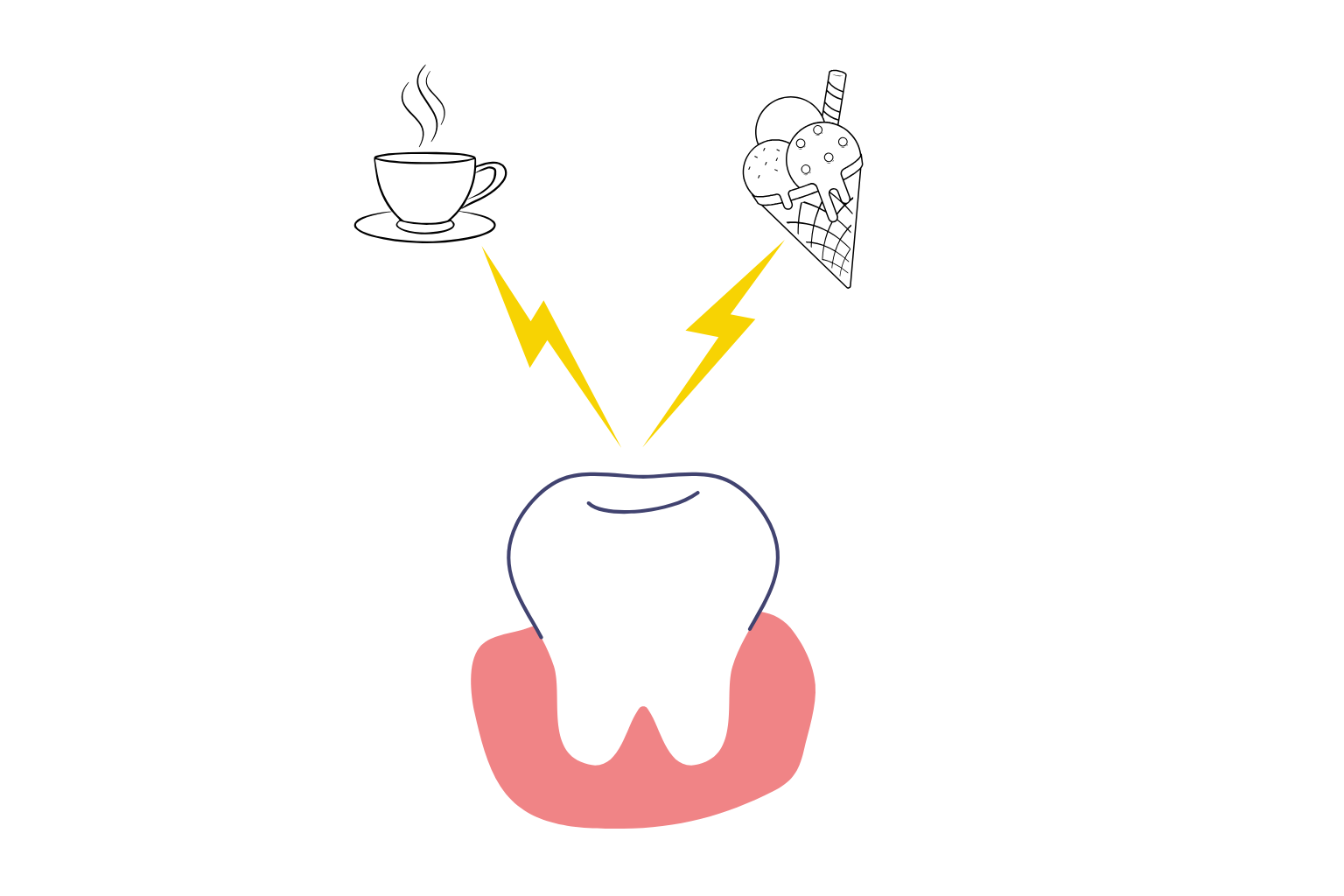
Tooth sensitivity is a short, sharp pain that occurs when your teeth come into contact with something hot, cold, sweet, sour or even cold air.
Unlike a toothache that may last for hours, sensitivity usually lasts only for a few seconds.
It is your tooth’s way of saying,
“Something is exposing the sensitive part of me.”
Why do teeth become sensitive?
To understand this, let’s first look at how a tooth is built.
Think of a tooth like a coconut.
The hard outer shell protects what’s inside.
Similarly, your tooth has a hard outer covering called enamel, which protects the inner layers.
Below the enamel is a layer called dentin.
Dentin contains thousands of tiny microscopic tubes that connect to the nerve inside your tooth.
Normally, these tubes are covered and protected.
But when they become exposed, hot, cold or sweet foods can stimulate the nerve, causing that sudden sharp pain.
What causes dentin to become exposed?
There are several possible reasons.
1. Brushing too hard
Many people believe that brushing harder means cleaner teeth.
Unfortunately, the opposite is true.
Using a hard toothbrush or scrubbing aggressively can gradually wear away enamel and push the gums back, exposing the sensitive root surface.
Remember:
Brush gently. Your toothbrush should clean your teeth—not scrub them like a kitchen floor.
2. Gum recession
Healthy gums protect the roots of your teeth.
As gums recede, the roots become exposed.
Unlike the crown of the tooth, the root is not covered by thick enamel, making it much more sensitive.
3. Worn enamel
Over time, enamel can wear down because of:
- Brushing too aggressively
- Frequent acidic foods and drinks
- Teeth grinding (especially during sleep)
- Age-related wear
Once enamel becomes thinner, the underlying dentin is less protected.
4. Cavities
A cavity doesn’t always cause severe pain.
Sometimes, the first sign is sensitivity to sweets or cold foods.
If sensitivity is limited to one tooth and continues to worsen, it could be due to tooth decay.
5. Cracked teeth
A small crack in a tooth may allow cold or sweet substances to reach the inner layers of the tooth.
Sometimes the crack is so tiny that it’s difficult to see without a dental examination.
6. After dental scaling
Some people notice temporary sensitivity after professional teeth cleaning.
This is completely normal.
If calculus had been covering parts of your tooth near the gums, removing it exposes the natural tooth surface underneath.
Your gums also begin to heal after scaling, which may temporarily increase sensitivity.
The good news is that this usually settles within a few days.
Don’t avoid scaling because of this temporary discomfort. Healthy gums are worth it.
7. Teeth grinding
Some people grind or clench their teeth while sleeping without realizing it.
Over time, this can wear down the enamel and make the teeth more sensitive.
Your dentist may recommend a night guard if this is the cause.
Is tooth sensitivity always serious?
Not necessarily.
Sometimes sensitivity lasts only a few days and settles on its own.
However, if the pain:
- Keeps coming back,
- Becomes more severe,
- Lasts for several minutes,
- Is present in only one tooth,
- Or interferes with eating,
it’s time to visit your dentist.
Sensitivity is a symptom—not a diagnosis.
Finding the cause is the key to treating it.
How is tooth sensitivity treated?
Treatment depends on the cause.
Your dentist may recommend:
- A toothpaste designed for sensitive teeth.
- Applying fluoride or desensitizing agents.
- Treating cavities.
- Replacing damaged fillings.
- Managing gum disease.
- A night guard for teeth grinding.
- In severe cases, root canal treatment if the nerve is irreversibly damaged.
There is no single treatment that works for everyone because the causes are different.
Can I prevent tooth sensitivity?
Yes, in many cases.
Here are some simple habits that help.
✅ Brush gently using a soft-bristled toothbrush.
✅ Use fluoride toothpaste.
✅ Avoid brushing immediately after acidic drinks like soft drinks or citrus juices. Wait about 30 minutes.
✅ Limit frequent sugary and acidic snacks.
✅ Wear a night guard if you grind your teeth.
✅ Visit your dentist regularly.
What should I avoid?
If your teeth are sensitive, don’t ignore the problem.
Also avoid:
❌ Brushing harder.
❌ Using a hard-bristled toothbrush.
❌ Constantly chewing ice.
❌ Skipping dental visits because you’re afraid.
The earlier the cause is treated, the simpler the treatment usually is.
Myth vs Fact
❌ Myth: Sensitive teeth are just a normal part of getting older.
✅ Fact: While sensitivity can become more common with age, it is not something you should simply accept. It often has an underlying cause that can be treated.
Lamidontist’s Quick Tip🦷
If cold water makes you wince, don’t just switch to warm water forever.
Your tooth is trying to tell you something.
Finding and treating the cause early can save you from bigger dental problems later.
Key Takeaways
- Tooth sensitivity is a short, sharp pain triggered by hot, cold, sweet or sour foods and drinks.
- It happens when the sensitive inner layer of the tooth becomes exposed.
- Common causes include worn enamel, gum recession, cavities, cracked teeth, teeth grinding and temporary sensitivity after scaling.
- Using a soft toothbrush and gentle brushing technique helps protect your teeth.
- Persistent or severe sensitivity should always be checked by a dentist.
A Final Word
Think of tooth sensitivity as the warning light on your car’s dashboard.
You could ignore it for a while, and the car might still run.
But that small warning could be pointing to a problem that’s much easier to fix today than it will be tomorrow.
Your teeth work hard for you every single day—helping you eat, smile and speak.
When they start sending warning signs, listen to them.
A simple dental visit today could save you from pain, more complex treatment and unnecessary worry in the future.
Disclaimer: This article is for educational purposes only and should not replace professional dental advice. If you have persistent tooth sensitivity, severe pain, swelling or concerns about your oral health, consult your dentist for a proper examination.